YABeeP is attempting to use a sustainable approach to protect and increase the local bee population. Our interest is in honey, bumble and solitary bees. We use bee-friendly methods to our help bees; not exploit them.
The swarming season has certainly started now. A few members have reported that their hives have swarmed or that they have managed to get a swarm.
Fortunately, Sue H' emailed me a short story and some pictures of her experience yesterday. Well done Sue, especially as it was your first swarm catch. Great news that you caught them and that, as a result, Wendy is now in business with some natural bees. We look forward to updates and more pictures please Sue and Wendy.
A reminder to others:
Remember that a digital camera is one of your best bee tools. Taking photos of your exploits not only gives you an enjoyable permanent record, it also allows you to blow up the pictures after the event and study your bees for signs of health, etc..
Sue's story
I had been watching them over the last fortnight showing signs of swarming. When I had looked at the hive around 10:00 in the morning there were very few flying so I didn't expect them to be leaving today, as the weather was not that bright.
I didn't see the swarm leave my hive, but noticed them buzzing around the back wall of the garden around 2:15 in the afternoon.
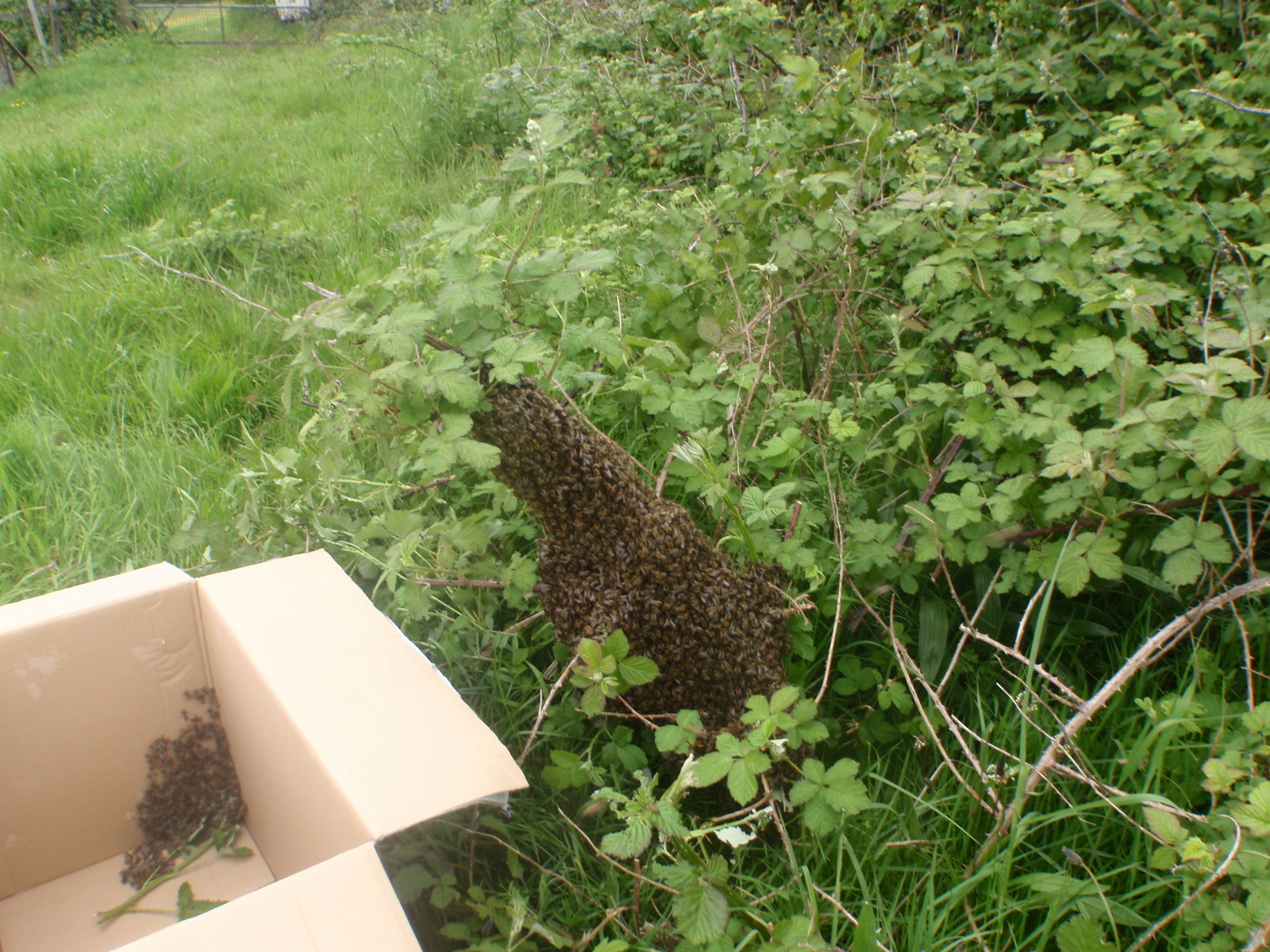
They spent about 15-20 minutes flying around the back wall before all went quiet again. I didn't see them fly off so I went into the field below my garden and found them in two separate clusters about 2-3 feet above the ground on a bramble bush. I was surprised by this as advice was to put bait hives 15 feet from the ground.
By the time I had got together my kit, a cardboard box, Wendy for moral support and returned to the field they had move into one mass closer to the ground and in more accessible position. We cut the brambles away around the swarm then cut and picked up the main stem to shake into the box. We didn't get many the first time around as some clung to the surrounding bushes, but bit by bit we added more bees to the box. By this time there were a few on the outside of the box. The box had a hole in the side as I had it on the roof for a bait hive, but the bees decided they wanted to go the edge of the opening on the top of the box.
We left the box in the field until dusk and could see no more bees going in. Then we passed them back over the hedge and tipped them into Wendy's hive.
Bill who has played host to the bees
*** click any photo to enlarge ***
Last Thursday I took a swarm call from a member of the public who had a feral colony in their garden in a tree which had blown over in the gales the week before. Removing an established colony is nearly always a 'no no', but having established that they were probably honeybees I thought I'd have a 'look see' just in case.
Comb visible at the base
of the severed trunk
Sure enough, it was a healthy colony. It had probably been there for at least 2 years and it seemed that it just might be possible to cut the trunk and move it to a member's garden for safe keeping and to carry on living as a healthy colony. Wouldn't swarms from that be worth having?!!! The tree was blocking the lawn and needed to be removed - though I am glad to report that owner agreed that rather than kill the bees he was happy that we prop up the trunk and leave the colony in situ, had it proved too difficult to shift.
As luck would have it the next YABeeP meeting was in two days time so I agreed with the householders that I'd see if we could arrange a posse of beekeepers and return that Sunday. Recruiting volunteers was easy as several came forward realising that it was an experience not to be missed.
Video of bees happily flying
Let's do it
Some of the gang assemble
Having agreed a convenient time for all involved, a motley crew of YABeePers assembled on site yesterday in glorious sunshine looking like we meant business! The bees were happily active, having clearly recovered from their trauma of a week or so ago when the tree fell. Little did they know what was about to befall them as their Sunday afternoon peace was shattered by a chain-saw wielding group of beekeepers.
The situation was assessed, a strategy was agreed, bee suits were donned and 2 chain saws were started - that tranquil garden setting suddenly became a flurry of activity, noise and purpose.
The offending laburnum tree had probably stood up to fifteen feet high. The c.15" diameter trunk rose about 5 feet from the ground where it split into 3 large branches with the rest of the tree branching off above that. The centre of these 3 main branches provided the entrance for the bees who were living in the main trunk below. The tree had suffered canker for the last few years and clearly had severe rot in a few places including the trunk which the bees were occupying. We had no clue as to the extent of the rot other than it was large enough to support a colony of bees over the years and that comb could be seen at the base where the tree had been severed at ground level by the gale. No bees were flying from the base. Had it been solid wood we could not have contemplated lifting it, but our hope was that it was hollow enough to have removed a substantial portion of the weight.
Operations started by removing the 3 main branches. We chose not to block off the bee entrance as so many were flying in the afternoon sun that it would have created as many problems as it solved. Amazingly the noise and vibration from the saws caused little concern to the bees and most of us quickly removed veils as working in bee suits ain't 'alf 'ot!
The first branch goes
Let's get digging!
We had hoped that once the top was removed we could drag the trunk onto the lawn and strap it ready for lifting, but there turned out to be a large root holding it which was unfortunately right under the fallen tree! There was no alternative but to remove the bottom section so there followed about an hour of mining under the tree to provide clear access for Fiona to swing her chain saw. Eventually, after much hard work and a sterlingly nifty bit of chain-work by Fiona it was free, though we had unfortunately had to cut off the bottom 4" of comb in order to clearing the root. Fiona was eventually able to save this once the main trunk was strapped and lifted out of the way.
All that remained now was to clear up and return at dusk, once all the bees had returned, to move it to Yatton.
Strapped and ready to shit
Amazingly, during our two and a half hours of sawing, chopping, digging and hauling the bees had remained gentle and calm throughout, not one sting was taken, despite most of us being unveiled throughout the majority of the operations. Two onlookers got bees in their hair but both were freed without incident.These are a gentle temperament dark bee - what beauties!
The Removal
At 9pm a party reassembled on site to get the trunk into the 'custard cab' for the journey home as we felt being inside the car between the axels would provide the bees with a gentler journey than bouncing around on a trailer. Moving the trunk was made more easy following Ali's epiphany to strap it to a sack barrow and wheelbarrow it along - beauty and brains, eh - dangerous!
By 10:30 pm they were settled in Yatton, on Ali's rockery awaiting their inaugural Yatton flight once day broke. As Ali lives just around the corner from where we meet for YABeeP, she has agreed to show any interested members the bees.
Safely back in their new home the following day
Afterthought
As Fiona so beautifully commented after we had done all the work, this exercise had not only provided us all with much valuable insight and experience into feral bees but it had also shown how a bunch of bee-friendly amateurs could so willingly come together to give their time and effort to save bees - she suggested this truly embodied the spirit of YABeeP - well said Fiona!
Mention must go to the YABeePers Ali, Fiona, Mark, Andrew, Ray, Sarah and your's truly who turned out work so hard on this project.
Thanks also to Martin, Mark's and my boys who provided assisting muscle for getting the trunk into and out of the 'custard cab' for the journey.
Finally our thanks go to the householders, especially Richard the assisting chain-sawer and Bill who had loved and nurtured the bees.
Robin Morris
14 May 2012
More pictures & videos (click to enlarge photos) :-
Bees fanning during the disturbances
The second branch bites the dust
Time for the big one - yet the bees fly undisturbed!
Removing a branch exposes a new entrance
Top done; now let's sort the bottom!
Fiona gets stuck in
Preparing for the first lift
The root meant we had to loose the bottom 4" of comb
It's well known that you can 'drum' bees to make them climb out of a bee box. Here the same effect is seen when Fiona vibrates the trunk with her chain-saw while she cuts off the bottom to save the bottom 4" of comb. The vibration makes the bees climb to the top of what they are on - a useful trick to get them out of a harvested honey box. Drumming with your fingers has the same effect but will probably take a good 10 minutes - kinder when honey harvesting than using a chain saw!
A queen cell is found in the bottom comb
The bottom cut is propped up to allow the bees to go home
Job done, bees removed.....
....except for a few stragglers that need scooping and placing by the entrance
I'm not missing this...
...Nor am I, though I was in such a rush I put my veil on backwards!
It's been a while since we last posted pictures of member's hives so I am creating this page to allow us to do so. Here's our last page from 2010.
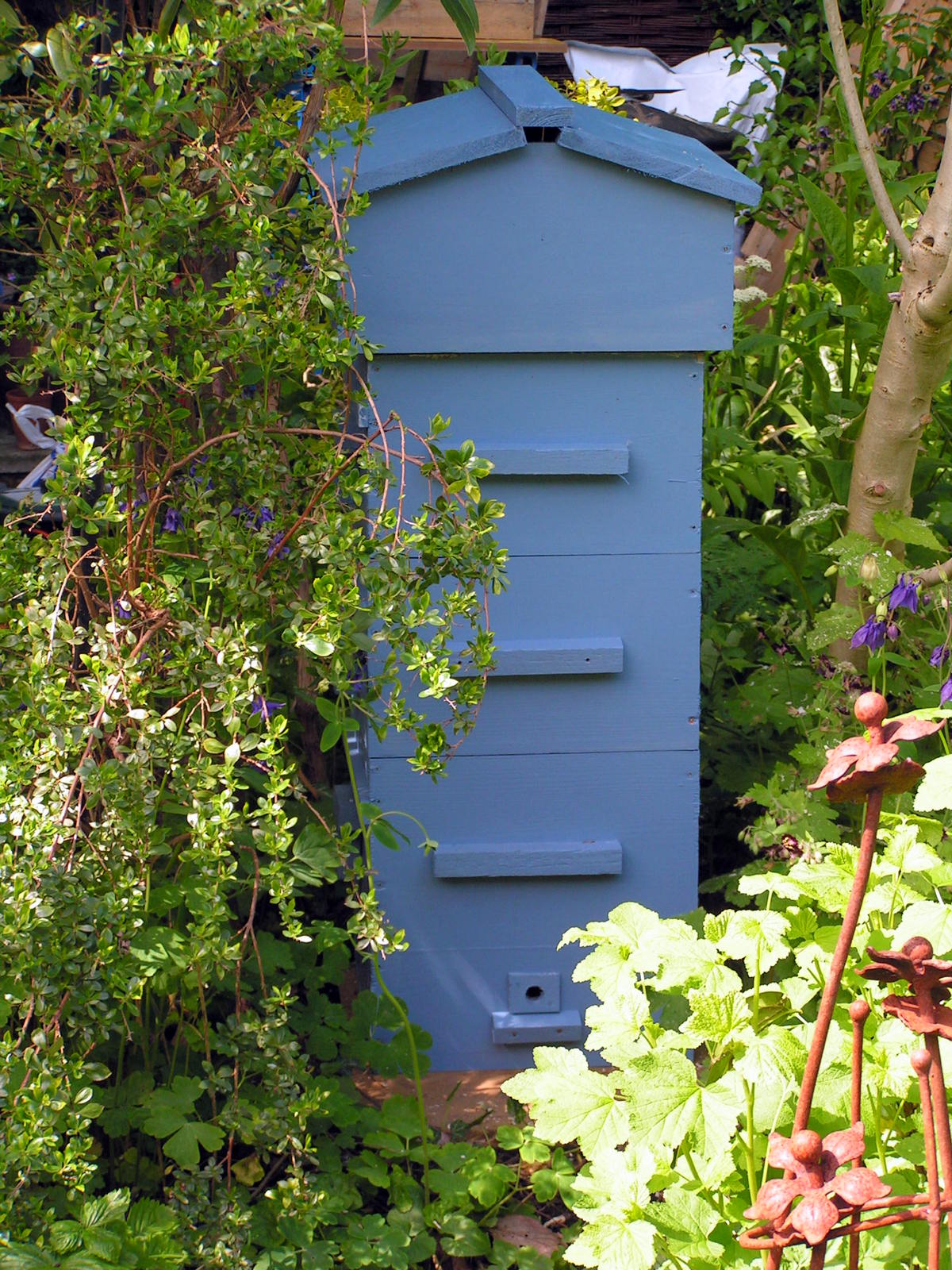
Following the Hive Building Day 3 weeks ago there should be another 20 hives being completed about now so lets see your photos of these as soon as they are finished and placed in situ ready for bees. However, this page is not just for those who built their hives at the workshop - I also invite YABeePers to send me your pictures of your hives built independently this year or last - let's show what we've been up to.
Who knows, maybe we could give a prize to the best looking hive?!!!
Robin
*** Remember, click any photo to enlarge ***
And the first entry is......
Andrew P's newly completed Warré
Andrew P's hive from showing viewing windows
Emma & Dave's skep & skep house
Robin & Sarah's new observation hive,
though I can't take any credit for the build - read the full story here
Fiona's rooftop model
with one box on loan housing Bryony's swarm
~~~~~~~~ Gary & Kieran's hive ~ they have included some helpful descriptions:
The completed main hive, set up with two of the three brood boxes. It's elevated in a stool at the moment as its in a wild part of the garden with very long grass in front of it. I need to tie the whole lot down to a paving slab before any strong winds....
...the same, but showing where the hive has been situated in a quiet spot away from the house, with the entrance SE facing. It gets shade for part of the day from the summer house behind the camera.
Gary & Kieran built another roof and base from scrap wood to turn our third brood box into an extra bait hive. This is up on the garage roof to make it a more ideal height for the scouts. Its also SE facing.
After the "getting your bees" meeting, we were inspired to go home and turn this old wooden crate into another bait hive: just painted it in eco paint and pinned a plastic sack on the top to make a waterproof roof then drilled an entrance hole in the base. This one is on a small shed roof at the end of the garden. The entrance only gets evening sun, but I couldn't resist this spot nestled amongst the trees as it seemed such a natural bee home!
Roger's hive
Sarah Mal's magnificent horizontal...
...the same in its place of honour.
....Sarah Mal's Warré...
....and her bait hive.
~~~~~~~~~~~~~
Bronwen's bees
Bronwen & helper shaking a swarm into her horizontal hive
NB: These bees subsequently absconded. Walking bees in may be a better option than shaking them in . There is some wise opinions that suggests that if they walk in they claim ownership of their box as they do so - this makes sense as bees in nature always walk into their colony - shaking them in by-passes this stage and may be a factor in absconding behaviour.
The strange 2012 early season weather seems to have effected many swarms as there are many reports of a high incidence of absconding. I had one swarm abscond 3 times myself.
Bronwyn - walking in her second swarm
Bronwen's bees congregate on her pergola where they stayed for a couple of hours after absconding. She reports "I was just getting ready to collect them and try again when I had the experience of watching them fly over my house. I attemted to follow them but without success so sadly I am beeless once more." Bad luck Bronwen, no fault on your part so better luck next time. :-(
Unless otherwise stated, I own the copyright to all the original material on this blog. You may freely add links to this website or use the advice given on these pages to help you in your own natural beekeeping journey. However, you may not reproduce the words or pictures in any other form without my express written permission. For permissions please email me at YABeeP[at]gmail[dot]com.
 The swarming season has certainly started now. A few members have reported that their hives have swarmed or that they have managed to get a swarm.
 Fortunately, Sue H' emailed me a short story and some pictures of her experience yesterday. Well done Sue, especially as it was your first swarm catch. Great news that you caught them and that, as a result, Wendy is now in business with some natural bees. We look forward to updates and more pictures please Sue and Wendy.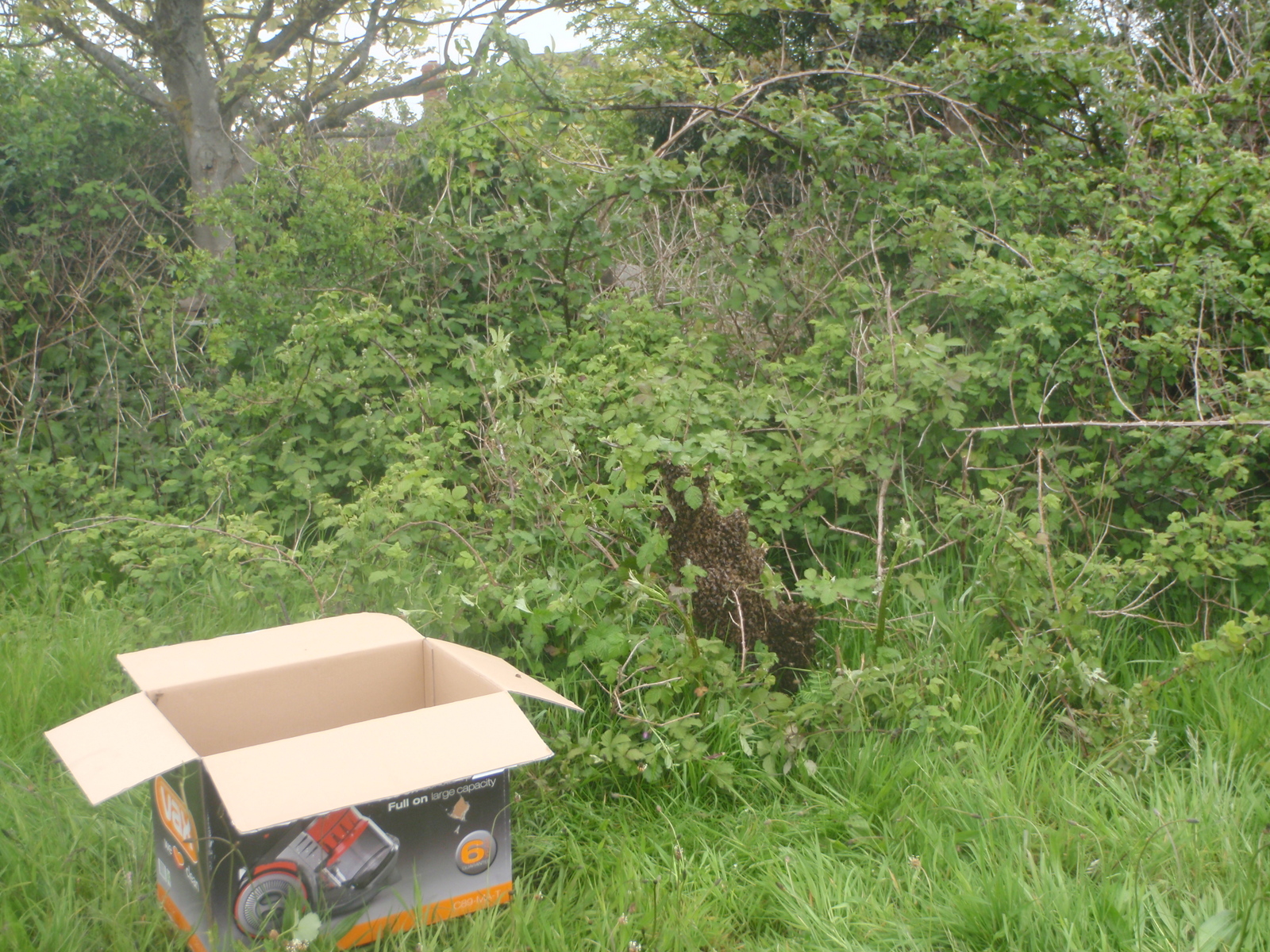


.JPG)
.JPG)
.JPG)



 Posts
Posts


